Platform comparison
| Platform | YES odds | NO odds | Fee | KYC | Settlement | |
|---|---|---|---|---|---|---|
Polymarket (via PolyGram) Pick polygram.ink (preferred broker) |
35% | 65% | 0% (USDC on-chain) | No-KYC up to $1,500 | USDC, auto via UMA oracle | Open the market → |
Polymarket (direct) polymarket.com |
35% | 65% | 0% | Geo-blocked in US/UK/EU | USDC, on-chain | Open the market → |
Kalshi kalshi.com |
— | — | Up to 7% per trade | US-only, KYC required | USD | Open the market → |
Betfair Exchange betfair.com |
— | — | 2-5% commission | Full KYC from first trade | GBP / EUR | Open the market → |
Manifold Markets manifold.markets |
— | — | Play-money (mana) | None — play-money | Mana (no cash-out) | Open the market → |
Outcome probabilities
Current market-implied probability for each outcome, from the live order book.
| Outcome | Probability |
|---|---|
| December 31 | 35% |
| August 31 | 28% |
| July 31 | 18% |
| July 17 | 11% |
Market context
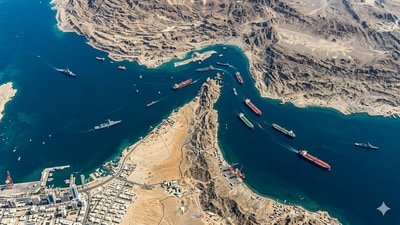
The question centres on whether the United States will formally establish and collect transit fees or tolls from shipping entities moving through the Strait of Hormuz by end-2026. Polymarket currently prices this scenario at 13% probability, reflecting substantial scepticism that such a scheme materialises within the settlement window. The mechanism would require either direct US government collection or payments channelled through an authorised intermediary, and encompasses any fee structure—flat rates, percentage-based levies, or in-kind compensation such as cargo shares.
Historical precedent offers limited direct comparison. The US has never systematically charged transit fees for the Strait of Hormuz, though it has long maintained a naval presence there ostensibly to protect freedom of navigation. The Trump administration in 2020 discussed cost-sharing arrangements with Gulf allies for regional security, but these remained bilateral defence agreements rather than transit tolls. More relevant are cases where nations have attempted to monetise strategic chokepoints: Egypt's Suez Canal generates substantial revenue through transit fees, though that arrangement predates modern international law. The political and legal barriers to unilateral US toll collection are substantial—such a scheme would likely trigger pushback from major trading partners, UNCLOS complications, and questions about enforcement mechanisms.
Traders should monitor announcements regarding US Middle East policy, particularly any statements from the State Department or Pentagon about burden-sharing in the Strait. Congressional proposals or budget allocations earmarked for Hormuz security operations could signal movement toward fee structures. Regional escalation involving Iran, shipping disruptions, or major incidents affecting commerce would create pressure for alternative funding models. Recent reporting on US military posture in the region remains the primary indicator; absent explicit policy announcements, the 13% probability reflects the genuine structural obstacles to implementation.
Methodology
This page is a comparison snapshot: one live quote, four reference venues with their key attributes, and a single execution path — every trade button routes to PolyGram, which mirrors the Polymarket order book directly.
Resolution & payout
At resolution the UMA oracle takes over: a proposer posts the outcome with a bond, any token holder can dispute within two hours. Without dispute the result is accepted and the smart contract distributes USDC instantly.
On Kalshi (CFTC-regulated) resolution runs through their in-house clearing engine in USD. Betfair Exchange settles after match end in the account's local currency. Manifold pays no cash — only its in-platform "mana" currency.
FAQ
- What's the difference between YES and NO shares?
- A YES share pays $1.00 if the event happens, $0 otherwise. A NO share pays $1.00 if the event doesn't happen. The market price between 0¢ and 100¢ is the implied probability.
- What does Polymarket cost to trade?
- Polymarket itself charges 0% — the only cost is the Polygon network fee, typically under $0.01 per transaction. Off-chain venues like Kalshi or Betfair charge 2-7% commission.
- How fast are USDC deposits?
- Polygon credits deposits after 12 confirmations — usually under 30 seconds. Withdrawals follow the same path and land back in your wallet within minutes.
- Do I need to KYC for this market?
- On Polymarket directly, no — it's wallet-based. Intermediary brokers like PolyGram trigger KYC only above $1,500 of lifetime trading volume; under that you trade pseudonymously with a single wallet address.
- How reliable are the quoted odds?
- The YES/NO percentages are the live mid-prices of the Polymarket order book. On deep markets they move every few seconds; on thinner ones you'll see short plateaus.
%22%2F%3E%3Cpath%20d%3D%22M%206%2066%20A%2026%2026%200%200%201%2058%2066%22%20fill%3D%22%23E6B98D%22%20opacity%3D%220.9%22%2F%3E%3Ccircle%20cx%3D%2232%22%20cy%3D%2226%22%20r%3D%2222%22%20fill%3D%22%23F5CBA7%22%2F%3E%3Crect%20x%3D%2210%22%20y%3D%224%22%20width%3D%2244%22%20height%3D%2214%22%20rx%3D%227%22%20fill%3D%22%2354a9eb%22%20opacity%3D%220.9%22%2F%3E%3Crect%20x%3D%228%22%20%20y%3D%2218%22%20width%3D%228%22%20%20height%3D%2218%22%20rx%3D%224%22%20fill%3D%22%2354a9eb%22%20opacity%3D%220.7%22%2F%3E%3Crect%20x%3D%2248%22%20y%3D%2218%22%20width%3D%228%22%20%20height%3D%2218%22%20rx%3D%224%22%20fill%3D%22%2354a9eb%22%20opacity%3D%220.7%22%2F%3E%3C%2Fsvg%3E) and
and%22%2F%3E%3Cpath%20d%3D%22M%206%2066%20A%2026%2026%200%200%201%2058%2066%22%20fill%3D%22%23E6B98D%22%20opacity%3D%220.9%22%2F%3E%3Ccircle%20cx%3D%2232%22%20cy%3D%2226%22%20r%3D%2222%22%20fill%3D%22%23F5CBA7%22%2F%3E%3Crect%20x%3D%2210%22%20y%3D%224%22%20width%3D%2244%22%20height%3D%2214%22%20rx%3D%227%22%20fill%3D%22%2354a9eb%22%20opacity%3D%220.9%22%2F%3E%3Crect%20x%3D%228%22%20%20y%3D%2218%22%20width%3D%228%22%20%20height%3D%2218%22%20rx%3D%224%22%20fill%3D%22%2354a9eb%22%20opacity%3D%220.7%22%2F%3E%3Crect%20x%3D%2248%22%20y%3D%2218%22%20width%3D%228%22%20%20height%3D%2218%22%20rx%3D%224%22%20fill%3D%22%2354a9eb%22%20opacity%3D%220.7%22%2F%3E%3C%2Fsvg%3E)
Trade US charges Hormuz fees by 2026? on PolyGram
Live order book, 0% fees, USDC settlement in seconds.
Open live market →